Let’s be real for a second. The job interview is one of the most unnatural, high-pressure, and terrifying situations in modern life.
Your hands get sweaty. Your heart feels like it’s going to pound out of your chest. You spend hours memorizing “perfect” answers to questions you hope they’ll ask, only to completely blank the moment they ask you to “tell me about yourself.”
It feels like a final exam where the subject is you, and your entire future is on the line.
We’ve all been there. And it’s a terrible feeling.
But what if I told you we’re looking at it all wrong? What if a job interview isn’t a test? What if it’s actually a 60-minute marketing campaign, and the product is you?
When you make that one simple mindset shift, everything changes. You’re no longer the nervous student being graded. You are the marketer, in complete control of the brand message, the value proposition, and the closing pitch.
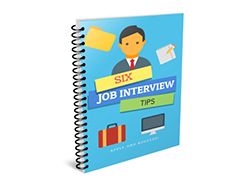
I recently found a tiny, 6-page guide called “Six Job Interview Tips,” and it’s a brilliant “cheat sheet” for this exact marketing approach. It’s not about memorizing lines; it’s about mastering the simple, psychological levers that turn a nervous conversation into a job offer.
Let’s break down the marketing principles behind these simple tips.
The First 7 Seconds: The Conversion Rate Optimization of Your First Impression
In marketing, we obsess over the “above the fold” content on a website. Why? Because we know that we have about three seconds to capture a visitor’s attention before they click away.
Your job interview is no different. The first seven seconds can determine the entire outcome. This is a psychological principle called the “primacy effect.” The interviewer’s brain will make a snap judgment about you, and then spend the rest of the interview subconsciously looking for evidence to confirm that initial judgment.
This is where the guide’s first tips come into play.
Your Handshake is Your Opening Headline
The guide mentions the handshake, and it’s not just old-fashioned advice. A firm, confident handshake (not a bone-crusher) and direct eye contact is a non-verbal data point. It communicates confidence and professionalism before you’ve even said a word. A limp, weak handshake communicates the opposite. It’s your first and most important headline. Get it right.
Professionalism is Your Brand’s Packaging
You wouldn’t put an amazing product in a cheap, damaged box. How you dress and present yourself is your brand’s packaging. The rule is simple: dress one level above what the company’s daily dress code appears to be. It shows respect for the process and signals that you are taking the opportunity seriously.
The Pre-Campaign Research: Your Market & Competitor Analysis
You would never launch a marketing campaign without understanding your target audience and the competitive landscape. Yet, most people walk into an interview knowing almost nothing about the company or the person sitting across the table.
Researching the Company Isn’t Optional, It’s the Bare Minimum
Don’t just read the “About Us” page. That’s what everyone does. Dig deeper. Find a recent press release. Read an article about their latest product launch. Understand their biggest challenges and their recent wins. When they ask, “Why do you want to work here?” you won’t give a generic answer. You’ll give a specific, intelligent response that shows you’ve done your homework.
Researching Your Interviewer is Your Secret Weapon
The guide mentions checking your interviewer. This is a game-changer. Look them up on LinkedIn. Where did they work before? Did you go to the same university? Do you have any mutual connections? Finding a small point of commonality can transform the dynamic from a sterile interrogation into a warm conversation.
Controlling the Narrative: Your Brand’s Core Message
Your answers to the interview questions are your marketing copy. The most important rule of brand messaging? Stay positive.
Negativity is a Brand Killer
The guide is blunt about avoiding negativity, and it’s 100% correct. Complaining about your previous boss, your old company, or a difficult project is the fastest way to get rejected. It doesn’t matter if you’re right. It makes you look like the problem. It signals that you might be a difficult person to work with.
Always frame challenges as learning opportunities.
- Bad Answer: “My last boss was a terrible micromanager.”
- Good Answer: “In my previous role, I learned that I do my best work in an environment with a high degree of autonomy where I can really take ownership of my projects.”
See the difference? You’re saying the same thing, but one is a complaint, and the other is a positive statement about your ideal work style.
The Ultimate Unfair Advantage: Your Referral Network
In marketing, a “warm lead” that comes from a trusted referral is infinitely more valuable than a cold lead. The same is true for job hunting.
The guide talks about “who you know,” and this isn’t about cheating. It’s about social proof. A recommendation from a current, trusted employee instantly elevates you above the anonymous pile of resumes. It tells the hiring manager that you’ve already been vetted by someone they trust. It’s the single most powerful advantage you can have.
This tiny, 6-page guide is the perfect pocket-sized reminder of these core principles. It’s the pre-game checklist you can review in the car right before you walk in the door.
It’s not about tricks. It’s about mastering the simple fundamentals of a successful “personal marketing campaign.”
And because I know how stressful this process can be, I want you to have this checklist. You can download “Six Job Interview Tips” for free.
Stop treating interviews like a test. Start treating them like a campaign you are destined to win.