Let’s talk about the most powerful asset in your entire business: your email list.
You’ve heard it a thousand times. “The money is in the list.” And it’s 100% true. It’s the only audience you own, the only direct line to your customers that no algorithm can ever take away.
So you do the work. You create a lead magnet. You set up a squeeze page. You start getting subscribers. You’re excited. You feel like you’re finally playing in the big leagues.
Then you sit down to write your first “e-zine” or newsletter. You spend hours crafting the perfect message. You hit “send.”
And then… crickets.
Your open rate is abysmal. Your click-through rate is a flat line. You get a flood of unsubscribes. Your emails are dying a slow, silent death in the “Promotions” tab or, even worse, the spam folder.
It’s one of the most demoralizing feelings in marketing. You’re doing what you’re supposed to do, but it feels like you’re shouting into a void.
What went wrong?
The brutal truth is that your subscribers aren’t ignoring you because your topic is boring. They’re ignoring you because you are breaking the unwritten rules of their inbox. You are making a series of simple, amateur mistakes that are killing your relationship before it even has a chance to start.
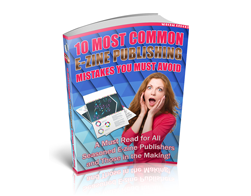
I just read a short, 11-page guide that is a perfect “autopsy report” for a dying email list. It’s called “10 Most Common E-Zine Publishing Mistakes You Must Avoid,” and it’s a masterclass in what not to do.
Today, I’m going to break down the four most lethal mistakes from this guide that are turning your list into a digital graveyard.
Mistake #1: You’re Sending from a Hobbyist’s Address (a.k.a. The Gmail/Yahoo Sin)
This is the original sin of new email marketers, and it’s the fastest way to ensure your emails are never even seen. You’re sending your business newsletter from a [email protected] or [email protected] address.
Why This is a Disaster: You look like an amateur, and you’re getting flagged as a potential spammer before you even start. Internet Service Providers (ISPs) like Google and Microsoft have sophisticated filters. When they see a bulk email coming from a free email provider, red flags go up everywhere. Your deliverability—the chance of your email actually landing in the primary inbox—plummets. You are actively telling the email gods that you are not a legitimate business.
The Fix: Get a Professional Email Address. Period.
This is non-negotiable. You need an email address associated with your own domain (e.g., [email protected]). It costs a few dollars a month through services like Google Workspace or your web host.
Then, you must send your emails through a professional Email Service Provider (ESP) like Mailchimp, ConvertKit, or AWeber. These companies have relationships with the ISPs and are optimized for high deliverability. This one small change can be the difference between a 10% open rate and a 40% open rate.
Mistake #2: You’re Treating Your Newsletter Like a One-Way Billboard
Your newsletter finally lands in the inbox. The subscriber opens it. And what do they see? A wall of corporate-speak, a generic stock photo, and three different “Buy Now” buttons. There’s no personality. No story. No soul.
Why This is a Disaster: You are forgetting that you are a guest in the most personal digital space a person has: their inbox. People don’t want to be talked at by a faceless brand; they want to connect with a real person. When your emails are cold and impersonal, you kill the relationship. You become just another piece of marketing noise to be ignored or deleted.
The Fix: Write from a Human to a Human.
This is the most important rule.
- Use a Real “From” Name: Send your emails from “Neil,” not from “The Marketing Team.”
- Write Like You Talk: Ditch the jargon. Write conversationally, as if you were writing to a single friend.
- Tell a Story: Start your email with a short, personal story or anecdote that relates to your main point. People are wired to connect with stories, not sales pitches.
- Ask a Question: End your email by asking for a reply. This encourages engagement and reminds them that there’s a real person on the other end.
Mistake #3: You’re the Unpredictable, Flaky Friend (Inconsistent Publishing)
You get inspired and send out three emails in one week. Then life gets busy, and your subscribers don’t hear from you for the next two months. Then you pop back into their inbox with a new offer.
Why This is a Disaster: You are training your audience to forget about you. Consistency is the foundation of trust. When you’re unpredictable, your subscribers lose the habit of opening your emails. When you finally do show up again, they’re thinking, “Who is this again?” and they hit the “unsubscribe” or “spam” button. You’ve become a stranger.
The Fix: Create a Schedule and Stick to It.
It doesn’t matter if it’s every Tuesday, every other Friday, or once a month. Pick a schedule that you can realistically commit to and stick to it. Consistency builds anticipation and habit. Your subscribers will start to expect, and even look forward to, hearing from you. It turns your newsletter from a random interruption into a welcome, regular part of their routine.
Mistake #4: There’s No “Velvet Rope” (No Subscriber-Only Privilege)
Everything you send to your email list is the exact same content you’ve already posted on your blog, on Facebook, and on Twitter.
Why This is a Disaster: You are giving people zero reason to stay subscribed. If they can get all of your best stuff without cluttering up their inbox, why would they give you that precious space? You’ve made your newsletter redundant. There’s no special value. There’s no feeling of being an “insider.”
The Fix: Make Your Subscribers Feel Like VIPs.
Your email list should be your inner circle. They deserve your best stuff, first.
- Offer Exclusive Content: Give them a tip, a strategy, or a personal story that you don’t share anywhere else.
- Give Early Access: Are you launching a new product or a sale? Let your email list know 24 hours before anyone else.
- Provide Subscriber-Only Bonuses: Offer them a special discount code or a free download that is only for them.
This creates a “velvet rope” around your email list. It makes people feel special, valued, and smart for being on the inside. It’s the ultimate key to long-term loyalty.
Conclusion
This 11-page guide is a powerful checklist of these and other mistakes that could be sabotaging your efforts. It’s a simple, direct path to fixing what’s broken and starting to build a real, profitable relationship with your audience.
Stop letting your emails die in the void. It’s time to become a welcome guest in your subscribers’ inboxes, not an annoying pest.
And to help you do that, I’m giving you the entire guide. You can download “10 Most Common E-Zine Publishing Mistakes You Must Avoid” for free.
What’s the biggest email mistake you see brands making today? Let me know in the comments.