If I had to point to the single most powerful tool in my marketing arsenal—the one that has generated more high-quality leads, closed more high-ticket sales, and built more trust than anything else—it wouldn’t be SEO, content marketing, or social media.
It would be the humble webinar.
But when I say “webinar,” I know what you’re picturing. A boring, hour-long PowerPoint presentation with a robot-voiced host and a sales pitch at the end that feels like a slap in the face.
That’s not a webinar. That’s a digital prison sentence. And it’s why most people fail miserably with them.
A real webinar is the closest you can get to sitting across the table from hundreds of your ideal customers at once, solving their biggest problems in real-time, and becoming their go-to authority in under 90 minutes. It’s a system. A sales machine. An ATM, if you do it right.
But the fear is real. “What if no one shows up?” “What if the tech fails?” “I hate public speaking!” “What would I even talk about?”
I get it. But these are the wrong questions. The right question is: “What’s the step-by-step system that eliminates these fears and guarantees a result?”
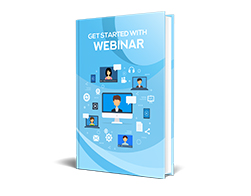
I just read a guide called “Get Started With Webinar,” and it’s a brilliant blueprint that answers that exact question. It demystifies the whole process. I want to share the core principles from it that will take you from webinar-zero to webinar-hero.
The Real Work Happens Before You Ever Go Live
Most people think success is determined by their on-camera performance. Wrong. About 90% of your success is locked in before you even open the presentation file. This is the foundation, and if you get it right, the webinar practically runs itself.
Stop Guessing. Pick a Topic That People Will Crawl Over Broken Glass to Attend.
This is mistake #1. People choose a topic that they think is interesting. You have to choose a topic your audience finds urgent.
It must be a “painkiller,” not a “vitamin.”
- Vitamin (Bad): “An Introduction to Digital Marketing”
- Painkiller (Good): “My 3-Step System to Get Your First 5 High-Paying Clients from LinkedIn (Without Spending a Dime on Ads)”
See the difference? The first is a vague “nice to have.” The second solves a specific, painful problem (no clients, no money) and offers a clear, desirable outcome.
Your Action Step: Survey your audience. Ask them: “What’s the #1 biggest challenge you’re facing right now with [your niche]?” The language they use is the exact language you should use for your webinar title.
The “Empty Room” Prevention Plan: How to Promote Your Webinar
The fear of an empty digital room is paralyzing. But getting people to show up isn’t about luck; it’s about a relentless, multi-channel promotion strategy. Don’t just send one email and hope for the best.
Your Action Step: Create a 10-day promotion schedule.
- Days 10-7: Announce the webinar to your email list and all social channels. Create a simple landing page that sells the outcome, not the webinar itself.
- Days 6-4: Share testimonials or case studies related to your topic. Build social proof.
- Day 3: Send a “why you must attend” email that digs into the pain points you’ll be solving.
- Day 1 (24 hours before): Reminder email.
- Webinar Day (1 hour before): Final reminder email. Urgency is your friend.
It’s Not a Presentation, It’s a Performance That Sells
Once you’re live, you are no longer a marketer. You are a teacher and an entertainer. Your job is to deliver so much value that the sale at the end becomes the logical next step.
The Perfect Presentation Structure (That Doesn’t Bore People to Tears)
Don’t just dump information. Guide your audience on a journey.
Your Action Step: Structure your presentation like this:
- The Hook (5 mins): Introduce yourself and the big promise of the webinar.
- The Problem (10 mins): Agitate the painful problem they have. Show them you understand their world.
- The “Aha!” Moment (30 mins): This is your core teaching. Deliver your 3-5 key tips or steps. This must be pure value. Give them actionable things they can do immediately.
- The Bridge (5 mins): Transition from the “what” and “why” to the “how.” Show them the full path to success and hint that you have a shortcut (your product/service).
- The Offer (10 mins): Clearly present your product as the fastest way to implement what you just taught. Stack the value with bonuses and a special webinar-only discount.
- The Q&A (15+ mins): This is where the magic happens. Answer every single question. This builds immense trust and overcomes sales objections.
The Webinar Isn’t Over When It’s Over
The biggest mistake rookies make is thinking the webinar ends when they click “End Broadcast.” The truth is, the majority of your sales will come in the 48 hours after the webinar.
Your Action Step: Create a follow-up email sequence.
- Email 1 (Immediately after): Send the replay link to everyone who registered.
- Email 2 (24 hours later): A “FAQ” email answering the top questions from the Q&A. Reiterate the offer.
- Email 3 (48 hours later): A case study or testimonial from someone who has used your product. Last call for the webinar-only discount.
This system turns a one-time event into a multi-day sales machine. Even better, you can take this archived webinar and turn it into an automated, evergreen asset that generates leads and sales for you 24/7.
This guide, “Get Started With Webinar,” lays out this entire process. It removes the fear and replaces it with a repeatable checklist for profit.
Stop seeing webinars as a scary, complicated chore. Start seeing them for what they are: the most powerful sales tool at your disposal.
And to help you build your own sales machine, I want you to have this blueprint. You can download “Get Started With Webinar” for free.
Go create some value. The sales will follow.