Let’s talk about the freelancer’s curse.
It’s the terrifying, gut-wrenching rollercoaster ride that every single freelancer knows all too well.
It’s the Feast-or-Famine Cycle.
One month, it’s a feast. You’re drowning in high-paying client work. You’re pulling all-nighters, fueled by caffeine and the thrill of a fat bank account. You feel like a king.
The next month, it’s a famine. The projects are done. The invoices are paid. And your inbox is a ghost town. The silence is deafening. You start to panic. You scramble, desperately hunting for your next meal, taking on low-paying, soul-crushing work just to keep the lights on.
It’s an exhausting, anxiety-fueled cycle that has nothing to do with how talented you are. I know brilliant designers, writers, and developers who are trapped on this hamster wheel, constantly swinging between feeling like a rockstar and a failure.
It’s not a business. It’s a high-stress survival game.
What if I told you that this curse is not a law of nature? It is a symptom. It is a symptom of a fundamentally flawed business model. A model where you are not a business owner, but a reactive, on-demand “worker-for-hire.”
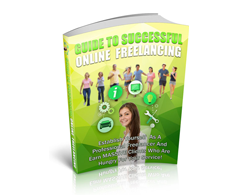
I recently broke down a 25-page guide called “Guide to Successful Online Freelancing,” and it’s a brilliant blueprint for breaking this curse forever. It’s about making one, simple, profound shift.
Today, I’m going to show you how to stop being a “worker-for-hire” and start being the CEO of a real, stable, and wildly profitable business.
The Billion-Dollar Mindset Shift: Stop Being a “Freelancer,” Start Being a “Consultant”
This is the most important mental shift you will ever make. It is the foundation of escaping the feast-or-famine cycle.
What’s the difference?
- A freelancer is a pair of hands. A client comes to them with a well-defined task (“I need you to write 5 blog posts,” “I need you to design a logo”), and they execute that task for a fee. They are an order-taker. A commodity.
- A consultant is a brain. A client comes to them with a complex business problem (“My website isn’t generating any leads,” “My brand looks outdated and isn’t attracting the right customers”), and the consultant provides a strategic solution. The logo or the blog posts are just one small part of that solution.
A freelancer competes on price and speed. A consultant competes on value and results.
A freelancer is a cost. A consultant is an investment.
Which one do you think gets paid more? Which one do you think is treated with more respect? Which one do you think has clients lining up to work with them?
When you start positioning yourself as the expert consultant, the entire dynamic of your business changes. You are no longer desperately hunting for gigs; you are attracting high-quality clients who need your strategic mind.
The Client-Attraction Machine: Your 3-Part System to Never Hunt for Clients Again
Okay, the mindset shift is the “why.” But what about the “how”? How do you actually build a business where clients come to you?
You build a machine. A simple, repeatable system for attracting, nurturing, and converting your ideal clients.
Part 1: Finding the “Hiding Places” (Your High-Value Fishing Pond)
The guide talks about “where to look for customers in masses,” but the amateur and the pro look in completely different places.
The amateur spends all their time on crowded, low-value freelance marketplaces like Upwork and Fiverr. They are competing with thousands of other freelancers in a global race to the bottom on price. It is a soul-crushing grind.
The pro understands that their ideal, high-paying clients are not posting “gigs” on these sites. They are hiding in plain sight, congregating in their own “digital watering holes.”
The secret is to get niche.
- Don’t be a “graphic designer.” Be a “graphic designer who specializes in branding for craft breweries.”
- Don’t be a “writer.” Be a “writer who specializes in email marketing for SaaS companies.”
Once you have your niche, finding the hiding places is easy. Where do craft brewery owners hang out online? Where do SaaS marketers congregate? (Hint: It’s probably in specific LinkedIn groups, subreddits, industry forums, and by following certain influencers.)
Stop fishing in the crowded, polluted ocean of generic freelance sites. Find your clean, quiet, and well-stocked private fishing pond.
Part 2: The “Expert Bait” (How to Make Them Come to You)
You’ve found the pond. Now, how do you get the fish to bite?
The amateur floats around hoping a fish will randomly swim into their net. They wait for someone to post a job opening.
The pro baits the hook. They don’t sell; they demonstrate.
You need to create a piece of “expert bait”—a high-value piece of content that solves a small, painful problem for your niche, for free.
If you’re the “graphic designer for craft breweries,” you could write an article or record a short video titled: “The 5 Biggest Label Design Mistakes That Are Making Your Beer Look Cheap on the Shelf.”
Then, you share that piece of content in the “hiding places” where you know your ideal clients are hanging out. You are not saying, “Hire me!” You are saying, “Hey, I understand your world, I understand your specific problems, and here is some incredibly valuable advice, for free.”
You have just transformed yourself from an annoying salesperson into a trusted, generous expert.
Part 3: The “Consultation Funnel” (Turning a Nibble into a Whale)
Your expert bait has worked. You’ve got their attention. Now what?
The amateur hopes that someone will be so impressed that they’ll send a DM or an email. This is leaving your entire business up to chance.
The pro has a system. Every single piece of “expert bait” you create must have a clear Call to Action (CTA) that leads the prospect one step deeper into your world.
Your CTA should not be “Hire Me.” That’s too big of a leap. The CTA should be for a low-risk, high-value “next step.”
At the end of your article about beer labels, your CTA should be:
“Want me to take a look at your current label? I’m offering a free, 15-minute ‘Brand Audit’ this week where I’ll give you 3 actionable tips to improve your shelf appeal. Click here to book your spot.”
This is your consultation funnel. It turns a passive reader into an active, warm lead who has explicitly raised their hand and asked for your expert help. You are no longer chasing clients; you are now scheduling consultations with people who are already pre-sold on your expertise.
Stop Being a Worker Bee. Start Building Your Hive.
The feast-or-famine cycle is not your destiny. It is a choice. It’s the result of choosing to be a reactive worker bee, constantly flying out in search of the next flower.
The path to freedom, stability, and wealth is to choose to become the beekeeper. It’s about building the hive—the system, the brand, the machine—that attracts the bees to you.
It’s a shift from hunting to farming. It’s a shift from being a freelancer to being a CEO.
This guide, “Guide to Successful Online Freelancing,” is the perfect blueprint for making that shift.
And because I want you to break the curse and build the business you deserve, I’m giving you the entire guide. You can download the “Guide to Successful Online Freelancing” for free.
What’s your single biggest struggle when it comes to finding high-quality, high-paying clients? Let me know in the comments below.