
Let’s talk about the sound that can instantly turn your entire world upside down.
It’s not a loud crash. It’s not a scream.
It’s the sound of your car making a horrible, grinding, clicking noise… and then silence.
In that one, terrifying second, your mind races. The tow truck. The mechanic. The bill. And then the cold, sickening feeling hits you in the pit of your stomach as you check your bank account and realize: I can’t afford this.
This is the brutal reality for millions of people. You’re living on a financial tightrope, one unexpected expense, one medical bill, one broken appliance away from a full-blown catastrophe. The stress is a constant, low-grade hum in the back of your mind. It’s a feeling of being completely out of control.
You’re not a bad person. You’re not lazy. You’re just trapped in a broken system, living paycheck to paycheck, with no safety net to catch you when you fall.
What if you had a fire extinguisher before the fire started? What if you had a first-aid kit before the accident?
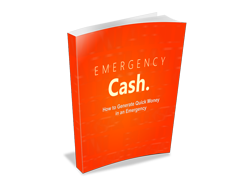
I just broke down a 54-page guide that is the ultimate financial first-aid kit. It’s called “Emergency Cash,” and it’s not just a book about surviving a crisis. It’s a brilliant, step-by-step blueprint for breaking the cycle of financial anxiety forever.
Today, I’m going to give you the survivor’s code from this guide. This is how you stop living on the edge and start building a fortress of financial peace.
The First 48 Hours: The “Stop the Bleeding” Triage
When you’re in a full-blown cash crisis, you don’t have time for a long-term financial plan. You need to stop the bleeding, and you need to do it now. This is about immediate, surgical action.
The guide calls this “painless ways to find money,” but I call it the “Hidden Asset Audit.”
You are surrounded by emergency cash right now; you just don’t see it. Your mission for the first 48 hours is to become a detective in your own home.
- The Electronics Graveyard: That old laptop in the closet? The drawer full of old smartphones? That’s not junk; that’s cash. A quick trip to an ecoATM or a listing on Facebook Marketplace can put a few hundred dollars in your pocket by tomorrow.
- The “Hobby Hoard”: That expensive camera you never use? The set of golf clubs collecting dust in the garage? Your passion has shifted, but the value is still there. Sell it. You’re not giving up a hobby; you’re buying yourself breathing room.
- The “Gig Economy” Lifeline: You have skills. Right now, on platforms like Upwork, Fiverr, or even your local community Facebook group, someone is willing to pay you for a few hours of your time. Can you write? Edit a video? Design a simple graphic? Mow a lawn? This isn’t about starting a new career; it’s about a quick, targeted cash injection.
The goal here isn’t to get rich. It’s to survive the immediate crisis without going further into the one thing that will keep you trapped forever: debt.
Breaking the Cycle: The #1 Rule of Financial Survival
Okay, you’ve survived the immediate crisis. Now, how do you make sure this never, ever happens again?
You start by following the single most important rule of personal finance, a rule that the wealthy understand and the broke ignore. The guide calls it “building your emergency fund,” but let’s call it what it really is: building your Freedom Fund.
This is a separate savings account with one job: to be your financial fortress. Its sole purpose is to protect you from the inevitable chaos of life. The goal is to have at least 3-6 months of your basic living expenses saved in this account.
“But I have no extra money to save!” I hear you.
This is where you make a fundamental mindset shift. You don’t save what’s “left over” at the end of the month. You pay yourself first.
The very second your paycheck hits your account, before you pay a single bill, before you buy a single coffee, you have an automatic transfer set up to move a small amount of money ($25, $50, whatever you can afford) into your Freedom Fund. You treat it like the most important bill you have.
This one, simple, automated habit is the single most powerful thing you can do to change your financial destiny.
The Real Enemy: Saying Goodbye to the Credit Card Trap
The guide has a brilliant section on “saying good-bye to credit cards,” and this is the final piece of the puzzle.
Credit cards are not your friend. They are a predator, designed with the sole purpose of keeping you in a cycle of high-interest debt. That “emergency” you put on your credit card isn’t an emergency you solved; it’s a crisis you’ve just postponed and made ten times worse.
The fastest way to take back control is to perform a bit of “plastic surgery.”
- Stop the Bleeding: Take the cards out of your wallet. Lock them away. The only way to get out of a hole is to first stop digging.
- Switch to Cash or Debit for a Month: This is a powerful psychological reset. When you have to hand over physical cash or see the money leave your debit account instantly, you feel the pain of the purchase. It forces you to be more mindful and intentional with every single dollar.
Your Financial Future is a Choice, Not a Circumstance
That feeling of panic when the car won’t start? That is not your destiny. It is not a permanent state of being.
It is the symptom of a broken system. And the beautiful, empowering truth is that you have the power to build a new system, starting today.
It’s a system built on awareness, not anxiety. A system built on a plan, not a prayer. A system that moves you, step-by-step, from a life of constant financial stress to a life of control, peace, and freedom.
This 54-page guide, “Emergency Cash,” is the perfect, no-nonsense blueprint for building that system.
And because I know that this is one of the most important journeys you will ever take, I’m giving you the entire blueprint for free. You can download “Emergency Cash” for free.
What’s the one small, “painless” thing you’ve done in the past to save money during a tight month? I’d love to hear your best tip in the comments below.